“Now you’ll have to find out who lied about his diagnosis.”
Those words struck Artyom Vorontsov harder than any scream could have.
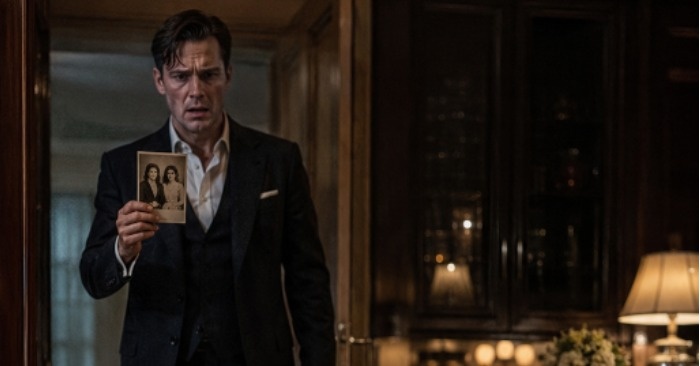
He stood beside the kitchen table with a photograph in his hand, unable to draw a breath.
Marina was in the picture.
His Marina.
The woman he had buried two years earlier after an accident on a mountain road.
She was smiling at the camera, holding the hand of a young woman with short dark hair.
The very same young woman who was now sitting on the floor beside his son.
The nanny.
Anna.
Artyom lifted the photograph.
“Where did you get this?”
Anna did not answer right away.
She slowly picked Lyova up into her arms, as if she feared that one wrong movement from the man in front of her could shatter the fragile world she had managed to rebuild over the past few weeks.
The boy pressed himself against her shoulder and let out another quiet laugh.
That laugh felt impossible.
Artyom could barely remember the last time he had heard it.
After Marina’s death, the house had seemed to freeze over. Doctors came and went, speaking in careful voices, showing scans, writing reports. Servants walked on tiptoe. Relatives whispered behind closed doors.
And Lyova lay in the white nursery, staring at the ceiling, barely reacting to the world around him.
Artyom had believed that this was fate.
He had believed his son had been broken by grief, illness, and his own body.
Now he looked around the kitchen, where expensive medical equipment had been replaced by pots, spoons, towels, pillows, and an old rattle tied with a red ribbon.
And his son was laughing.
Not politely.
Not by accident.
Alive.
Truly alive.
“I asked you a question,” Artyom said quietly. “Where did you get a photograph of my wife?”
Anna stood up.
There was no fear in her eyes.
Only exhaustion.
“She gave it to me three weeks before the accident.”
Artyom went still.
“You knew Marina?”
“She was my older sister.”
The kitchen became so silent that the ticking of a wall clock somewhere deep inside the house could be heard.
Artyom took a step back.
“Marina didn’t have a sister.”
Anna gave a bitter smile.
“That is what you were told.”
“She would have told me.”
“She was going to.”
Artyom felt anger rise inside him. Not at Anna. At the entire world, which had suddenly turned out to be nothing like the one he remembered.
“Why did you come into my house under a false name?”
“Because under my real one, I would never have been allowed inside.”
“By whom?”
Anna looked toward the kitchen door.
And Artyom understood that she was not afraid of him.
She was afraid of the people who lived in this house.
At that moment, a tall woman in a silk robe appeared in the doorway.
Vera Pavlovna, Artyom’s mother.
Her face was calm, but her fingers gripped the edge of her sleeve far too tightly.
“What is going on here?” she asked.
Anna immediately held Lyova closer.
The boy stopped smiling.
Artyom noticed it.
And for the first time in a long while, he looked at his mother not as a son, but as a man who had just been shown the edge of a terrible truth.
“Did you know Anna?” he asked.
Vera Pavlovna slowly shifted her gaze to the photograph in his hand.
For one brief second, her expression changed.
That was enough.
“Artyom,” she said softly, “this woman is dangerous. I warned you not to bring people in from the street.”
Anna went pale.
“From the street?”
“You appeared in our house a month ago,” Vera Pavlovna continued. “No references, no past, just a pitiful story and far too much interest in the child.”
Artyom said nothing.
Before, he would have believed his mother immediately.
But now notebooks lay on the floor.
His son was clutching Anna’s collar.
And his laughter still seemed to echo through the room.
“Mother, answer me,” Artyom said. “Did you know her?”
Vera Pavlovna looked him straight in the eyes.
“I knew Marina had a relative. Unstable. Envious. A girl from a poor family who always wanted to get closer to money.”
Anna let out a sharp, bitter laugh.
“So that’s what you call it now?”
“Be silent,” Vera Pavlovna said coldly.
Lyova flinched in fear.
Artyom noticed at once.
So did Anna.
She lowered her voice.
“Do not shout in front of him.”
Vera Pavlovna took a step forward.
“Give me the child.”
Anna did not move.
“No.”
One short word.
But it exploded through the kitchen.
Artyom raised his hand, stopping his mother.
“Lyova will stay where he feels calm.”
Vera Pavlovna turned to her son as if he had betrayed her.
“You are choosing a strange woman over your family?”
He looked at his son.
The boy had hidden his face against Anna’s chest.
“I am choosing my child.”
Those words sounded for the first time in a very long while.
Not as a phrase.
As a decision.
Vera Pavlovna straightened her back.
“You are exhausted. You do not understand. She has staged all of this.”
“Did she stage my son’s laughter too?”
His mother did not answer.
Artyom walked to the table and picked up the notebooks.
The first pages contained exercises written out minute by minute. Massage. Breathing. Reaction games. Musical cues. Attempts at movement. Notes about when Lyova smiled, when he reached out his hand, when he first turned his head toward a sound.
On one page, there was an entry:
“Today he laughed for almost a full minute. That means he hears the world inside himself. We must keep going.”
Artyom closed the notebook.
His throat tightened.
“Why did no one tell me he was improving?”
Anna looked at Vera Pavlovna.
“Because someone benefited from you believing he was hopeless.”
“Careful,” Vera Pavlovna said quietly.
But Artyom had already heard it.
“Benefited?” he repeated.
Anna walked to the kitchen cupboard, took a brown envelope from an old bag, and placed it on the table.
“Marina asked me to open this only when I was sure you were ready to hear the truth.”
Artyom stared at the envelope as if it were a bomb.
Marina’s handwriting was on it.
Slightly slanted, nervous, alive.
“To Artyom. If they do not let me say it myself.”
Vera Pavlovna abruptly stepped toward the table.
“Don’t you dare.”
Artyom caught her wrist.
For the first time in his life.
“Step back.”
His mother froze.
Anna rocked Lyova quietly. The boy looked at his father with wide eyes, as if he too were waiting for an answer.
Artyom opened the envelope.
Inside were a flash drive and a letter.
He unfolded the sheet.
The first lines blurred before his eyes.
“If you are reading this, it means I did not have the courage or the time to tell you the truth in person. Forgive me. I was not afraid of you. I was afraid of your mother.”
Artyom felt the ground slip away beneath him.
He kept reading.
“From the very beginning, Vera Pavlovna considered me a mistake. She said I had entered your family not through love, but through poverty. When Lyova was born and the doctors noticed the first problems with his movement, she began insisting on closed treatment, isolation, and silence. She said the Vorontsovs must not show the world a weak heir.”
Vera Pavlovna turned pale.
“That is a lie.”
Artyom did not even look at her.
He continued reading.
“I found another specialist. He said Lyova had a chance. Not an easy one, not a fast one, but a real one. He needs daily exercises, warmth, voices, music, play. Not a glass room. Not silence. Not fear.”
Anna whispered softly:
“She was happy about it like a child.”
Artyom lifted his eyes.
“You were with her then?”
Anna nodded.
“She came to me at night. She said she wanted to leave the mansion for a while. Not divorce you. Just take Lyova and begin treatment without pressure.”
Vera Pavlovna snapped:
“Enough.”
But no one was listening to her anymore.
Artyom looked back down at the letter.
“If anything happens to me, find Anna. She is the only person I trust with Lyova. Do not believe the diagnosis if they repeat it too confidently. Do not believe those who ask you to accept defeat. Our son is not broken. He is simply learning in his own way.”
The letter slipped from Artyom’s hands.
That sentence.
The very same one circled in red in the notebook.
He slowly lowered himself into a chair.
For the first time in years, the mansion did not feel suffocating.
It felt terrifying.
“Why didn’t you come sooner?” he asked Anna.
Tears appeared in her eyes.
“I did.”
Artyom raised his head.
“What?”
“A week after the funeral. They would not let me in. They said you did not want to see anyone from her past. I wrote letters. They came back. I tried calling. My number was blocked. Then I was threatened.”
“By whom?”
Anna stayed silent.
Vera Pavlovna slowly smiled.
“There is no proof.”
Anna looked at her.
“There is.”
She walked over to Lyova, crouched beside him, and pulled a small voice recorder from her pocket.
“Marina left more than a letter.”
Vera Pavlovna lost her composure.
“You have no right.”
Artyom pressed the button.
At first, there was only noise.
Then Marina’s voice.
Tired.
Trembling.
But real.
“Vera Pavlovna, please stop pressuring the doctors. Lyova needs a different course of treatment.”
Then came his mother’s voice.
Cold, familiar.
“Lyova needs peace. And Artyom needs an heir people won’t whisper about behind his back.”
Marina:
“He is a child, not a display case.”
Vera Pavlovna:
“You do not understand what kind of family you entered.”
A pause.
Then Marina said quietly:
“Then I will leave. And I will take my son.”
Vera Pavlovna’s voice became almost gentle.
“Try.”
The recording ended.
No one in the kitchen breathed.
Artyom stared at his mother.
In front of him stood the woman who had spent his whole life teaching him to be strong.
And now he saw that what she called strength was cruelty.
“You knew Marina wanted to leave?” he asked.
Vera Pavlovna said nothing.
“You knew about the other doctor?”
Silence.
“You ordered them not to let Anna in?”
Vera Pavlovna lifted her chin.
“I was protecting the family.”
Artyom stood.
“No. You were protecting the family name from my son.”
Those words struck her harder than a slap.
“You ungrateful man,” she whispered. “After everything I have done.”
“What did you do?” Artyom’s voice broke. “Locked a child in a room? Convinced me he would never be able to laugh? Hid my wife’s letter?”
Vera Pavlovna suddenly looked old.
Very old.
But there was no pity in him.
Not yet.
Because beside him, Lyova was breathing softly, exhausted after his small victory.
Artyom walked over to his son.
The boy was watching him carefully.
Not fearfully.
Not blankly.
Carefully.
“Lyova,” Artyom whispered.
His son reached toward him.
Slowly.
Awkwardly.
But on his own.
Artyom dropped to his knees.
His entire wealthy world disappeared.
There was no mansion, no guards, no banks, no contracts.
There was only a small hand reaching toward him through years of his own despair.
He took his son carefully, as if holding a living miracle.
And Lyova smiled.
“Da…” he breathed.
Artyom pressed him to his chest and, for the first time in a long while, cried openly.
Anna turned away.
Vera Pavlovna stood by the door, but no one looked at her.
No one.
An hour later, a lawyer, a doctor, and the police arrived at the house.
Not because Artyom wanted a scandal.
But because silence had already stolen one chance from his son.
Vera Pavlovna tried to speak calmly. She explained that everything had been done for the family, that the diagnosis had been confirmed, that Anna was manipulating the child, that Marina had been emotional after giving birth.
But the new doctor Artyom had called examined Lyova for a long time.
A very long time.
Then he said something that made Artyom’s hands tremble again:
“The child has responses. There are attempts at movement. There is emotional contact. I do not understand why active therapy was not started earlier.”
Anna closed her eyes.
Artyom asked:
“Is there a chance?”
The doctor looked at the boy.
“There always was.”
That sentence became the most terrible verdict.
Not on the illness.
On the adults.
The next day, the curtains were opened in every room of the mansion for the first time.
The unnecessary medical stands, cold devices, and heavy chairs were carried out of the nursery.
Soft mats were placed on the floor.
They bought toys that rang, rustled, rolled, fell, and made Lyova reach, laugh, get angry, and try.
Anna stayed.
But no longer as a secret nanny.
Artyom asked her not to leave.
She did not answer right away.
“I am not here for you.”
“I know.”
“And if you start pitying him again instead of helping him, I will leave and take all the evidence to court.”
He nodded.
“Fair.”
She looked at him a little more softly.
“He is not a fragile porcelain figurine. He is a child. He is allowed to laugh. He is allowed to fall. He is allowed to try.”
Artyom remembered every word.
A few weeks later, the house had changed.
Not quickly.
Not like in a fairy tale.
Lyova did not suddenly stand up.
He did not run down the stairs.
There was no miracle of the kind people like to show to those who are afraid of a long truth.
It was different.
He began to smile more often.
Then he held his head up for longer.
Then he reached for the rattle by himself.
Then he became angry when an exercise did not work and threw a spoon onto the floor.
Artyom laughed.
Anna said:
“That is good.”
“What is good?”
“He is angry. That means he wants something.”
And Artyom understood: even a child’s anger could be hope.
Vera Pavlovna left the mansion after the investigation began.
She did not ask for forgiveness.
Only once, she sent a letter.
Artyom did not open it immediately.
He placed it beside Marina’s letter.
Two envelopes.
One from love that had tried to save.
The other from pride that had destroyed.
He sat in front of them for a long time.
Then he picked up his mother’s letter.
There were only a few lines inside:
“I did not want evil. I was afraid of disgrace. Perhaps that was evil.”
Artyom folded the sheet.
Forgiveness did not come.
But understanding did.
Sometimes people destroy other lives not out of hatred, but because they are afraid of appearing weak.
And that does not make the pain any smaller.
A year passed.
On Lyova’s birthday, the house was noisy for the first time.
Not luxurious.
Not for show.
Just noisy.
There were pots, pillows, toys, and a cake with uneven icing in the kitchen again.
Artyom had baked it himself.
It turned out crooked.
Anna said it was obvious.
He replied that at least it was honest.
Lyova sat on the soft carpet, holding the rattle with the red ribbon.
The very same one.
He lifted it, shook it, and looked at his father.
“Pa-pa.”
This time, the word was clear.
Artyom froze every time, as if hearing it for the first time.
Anna smiled.
“Get used to it.”
“I don’t want to,” he said quietly. “Let it feel like a miracle every time.”
Later, when the guests had left, Artyom entered the nursery and saw a drawing on the wall.
Three figures.
Lyova.
Himself.
And a woman with long hair.
Marina.
Beside it, Anna had pinned the small photograph, the same one with the writing on the back.
Artyom looked at it for a long time.
“I didn’t save her,” he said.
Anna stood beside him.
“But you can save what she left behind.”
From downstairs came Lyova’s laughter.
Artyom turned toward the sound.
He was no longer afraid of children’s laughter in his house.
He walked toward it.
Always.
Because once, he had come back in secret to expose someone else’s lie.
And had found his own.
He had believed his son needed silence.
But his son had needed a voice.
He had believed wealth protected a family.
But it turned out that sometimes it built walls where arms should have been.
And from that day on, Artyom Vorontsov never again asked doctors only one question: “What will he never be able to do?”
Now he asked it differently:
“Where do we begin today?”
Because a child should never have to prove to adults that he is worthy of hope.
It is the adults who must prove to the child that they will not be the first to give up.